Deload Week Planner
Plan your deload with the right volume and intensity reductions for your strategy.
Current Training
Mesocycle Length
Deload Strategy
Want More?
Mesostrength schedules deloads at the right time and auto-adjusts your training around them.
Auto-Adjusted Volume
Weekly sets adapt based on your progress and recovery signals.
Structured Mesocycles
Complete training blocks with progressive overload and planned deloads.
Smart Progression
Automatic weight and rep prescriptions every session.
Fatigue Management
Built-in deload timing that prevents overtraining before it starts.
Performance Analytics
Track strength trends, volume history, and muscle group balance.
Personalized Programming
Every variable tailored to your experience, goals, and recovery.


How to Plan an Effective Deload Week
A deload is a planned period of reduced training stress designed to let your body recover from accumulated fatigue. Without deloads, hard training eventually leads to stalled progress, nagging aches, and declining performance. Think of it as a strategic step back that sets up your next leap forward.
When Should You Deload?
Most lifters benefit from a deload every 4 to 6 weeks of hard training. Signs you need one sooner include:
- Persistent joint soreness or lingering muscle fatigue that sleep does not resolve.
- Stalled or declining performance across multiple exercises for two or more sessions in a row.
- Motivation drops, poor sleep quality, or elevated resting heart rate.
Proactive, scheduled deloads are better than waiting until you feel broken. Plan them at the end of each mesocycle.
Volume Reduction vs. Intensity Reduction
There are two primary ways to reduce training stress. Cutting volume means doing fewer sets while keeping the same weight. This works well for lifters who want to maintain strength qualities during the deload. Cutting intensity means keeping all your sets but using significantly lighter loads. This approach is often better when joints need a break from heavy weights. A combination of both offers a middle ground and is the most common approach for intermediate lifters.
Making the Most of Your Deload
A deload is not a week off. You should still train, but the sessions should feel easy and refreshing. Use the time to focus on technique, mobility work, and recovery habits like sleep and nutrition. Coming out of a deload, you should feel eager to train hard again. If you still feel fatigued after a deload week, consider extending it by a few days or reassessing your overall training volume.
Frequently Asked Questions
Mesostrength plans your training for you.
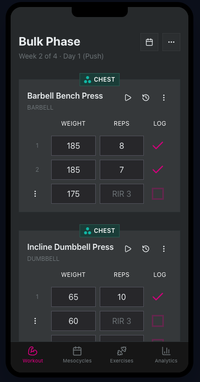
Mesostrength is an app for people who want to build muscle. It tells you what to lift each week. It uses your logged workouts and recovery to adjust your sets and weights. This calculator does one piece of that. The app does all of it, automatically.