Ideal Body Measurements Calculator
Calculate ideal proportions for chest, arms, waist, and more based on your frame size.
Your Measurements
Current Measurements (optional)
Add your current measurements to compare against your ideal proportions.
Want More?
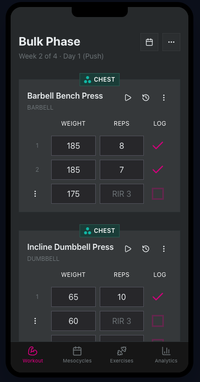
Build toward your ideal proportions with Mesostrength, which lets you prioritize lagging muscle groups.
Auto-Adjusted Volume
Weekly sets adapt based on your progress and recovery signals.
Structured Mesocycles
Complete training blocks with progressive overload and planned deloads.
Smart Progression
Automatic weight and rep prescriptions every session.
Fatigue Management
Built-in deload timing that prevents overtraining before it starts.
Performance Analytics
Track strength trends, volume history, and muscle group balance.
Personalized Programming
Every variable tailored to your experience, goals, and recovery.


Classical Proportions for a Balanced Physique
Long before modern bodybuilding, lifters and athletes pursued balanced proportions rather than maximum size. The idea is simple: certain ratios between body parts create a visually impressive and functionally strong physique. These formulas give you measurable targets to work toward.
The McCallum Formula
John McCallum developed a set of proportions based on wrist circumference, which correlates strongly with bone structure. The wrist is one of the few joints with minimal fat and muscle, making it a reliable indicator of frame size. All other measurements scale from the ideal chest size, which is calculated as wrist circumference multiplied by 6.5.
- Chest = Wrist x 6.5
- Waist = Chest x 0.70
- Hips = Chest x 0.85
- Bicep = Chest x 0.36
- Thigh = Chest x 0.53
Using These Numbers
These proportions represent targets that most natural lifters can approach with years of consistent training. They are not absolute rules. Your genetics, limb lengths, and muscle insertions all affect how close you can get. Use these numbers as long-term goals and as a way to identify which body parts might be lagging relative to the rest. If your chest is well ahead of your arms, for example, that signals a need to prioritize arm training.
Measuring Correctly
Always measure relaxed (not flexed) and at the same time of day for consistency. Use a flexible tape measure pulled snug but not tight. For the wrist, measure at the narrowest point just above the wrist bone. For chest, measure at nipple height. For biceps, measure at the thickest point. Track every 4 to 8 weeks rather than daily or weekly, since muscle growth is slow.
Frequently Asked Questions
Mesostrength plans your training for you.
Mesostrength is an app for people who want to build muscle. It tells you what to lift each week. It uses your logged workouts and recovery to adjust your sets and weights. This calculator does one piece of that. The app does all of it, automatically.