Muscle Recovery Time Estimator
Estimate how long a muscle group needs to recover before you can train it again.
Training Details
Muscle Group
Training Experience
Sleep Quality
Age Bracket
Want More?
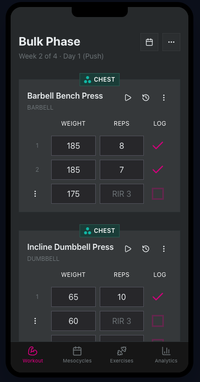
Mesostrength schedules your training frequency to respect recovery windows for every muscle group.
Auto-Adjusted Volume
Weekly sets adapt based on your progress and recovery signals.
Structured Mesocycles
Complete training blocks with progressive overload and planned deloads.
Smart Progression
Automatic weight and rep prescriptions every session.
Fatigue Management
Built-in deload timing that prevents overtraining before it starts.
Performance Analytics
Track strength trends, volume history, and muscle group balance.
Personalized Programming
Every variable tailored to your experience, goals, and recovery.


Understanding Muscle Recovery for Optimal Training
Recovery is when your muscles actually grow. Training creates the stimulus, but adaptation happens during rest. Training a muscle group again before it has recovered enough can accumulate excessive fatigue and reduce your long-term progress. On the other hand, waiting too long between sessions wastes potential training opportunities.
How Long Does Recovery Take?
Recovery time varies significantly by muscle group. Smaller muscles like biceps and triceps typically recover in 24 to 48 hours. Larger muscle groups like quads and back may need 48 to 72 hours or more after high-volume sessions. These are general ranges and individual variation is significant.
Factors That Influence Recovery Speed
- Training intensity - Sets taken closer to failure create more muscle damage and require longer recovery.
- Volume - More sets per muscle group means more total fatigue to recover from.
- Sleep - Growth hormone release peaks during deep sleep. Poor sleep can extend recovery by 20-30%.
- Age - Recovery capacity naturally declines with age, particularly after 35-40.
- Nutrition - Adequate protein (1.6-2.2g per kg bodyweight) and sufficient calories support faster recovery.
Practical Recovery Guidelines
Rather than relying solely on soreness as a recovery indicator, track your performance. If your strength on key lifts is maintained or improving session to session, you are recovering well. If performance drops for two or more sessions in a row, you likely need more rest between sessions or a reduction in per-session volume. Soreness is a poor indicator of recovery status, as muscles adapt to repeated bouts and produce less soreness over time even when recovery is incomplete.
Frequently Asked Questions
Mesostrength plans your training for you.
Mesostrength is an app for people who want to build muscle. It tells you what to lift each week. It uses your logged workouts and recovery to adjust your sets and weights. This calculator does one piece of that. The app does all of it, automatically.