Am I Overtraining Quiz
Take a quick quiz to assess your overtraining risk and get actionable recovery advice.
How has your sleep quality been over the past 2 weeks?
Want More?
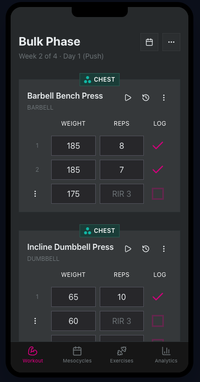
Mesostrength prevents overtraining by managing your volume within recoverable limits and scheduling deloads.
Auto-Adjusted Volume
Weekly sets adapt based on your progress and recovery signals.
Structured Mesocycles
Complete training blocks with progressive overload and planned deloads.
Smart Progression
Automatic weight and rep prescriptions every session.
Fatigue Management
Built-in deload timing that prevents overtraining before it starts.
Performance Analytics
Track strength trends, volume history, and muscle group balance.
Personalized Programming
Every variable tailored to your experience, goals, and recovery.


Understanding Overtraining and Overreaching
Overtraining syndrome is a state of chronic fatigue and performance decline caused by excessive training load without adequate recovery. It is distinct from normal post-workout fatigue and can take weeks or months to recover from if left unchecked.
Overreaching vs Overtraining
Functional overreaching is a deliberate, short-term increase in training stress that leads to a temporary performance dip followed by supercompensation. Non-functional overreaching occurs when training stress exceeds recovery capacity for too long, leading to stagnation. True overtraining syndrome is the extreme end, where the body's hormonal, immune, and nervous systems are compromised. The line between productive overreaching and harmful overtraining is often thinner than people expect.
Key Warning Signs
The most reliable early indicators include persistent strength decline across multiple sessions, disrupted sleep despite fatigue, elevated resting heart rate, loss of training motivation, and mood changes like increased irritability or anxiety. Appetite changes and prolonged muscle soreness are also common signals. No single symptom confirms overtraining, but when several appear together, it is time to pay attention.
Prevention Strategies
The best approach is to build recovery into your programming from the start. Schedule deload weeks every 4 to 6 weeks, prioritize 7 to 9 hours of sleep, manage life stress alongside training stress, and track subjective markers like motivation and soreness. Progressive overload should be gradual. If you notice early warning signs, a proactive deload is always cheaper than a forced layoff.
Frequently Asked Questions
Mesostrength plans your training for you.
Mesostrength is an app for people who want to build muscle. It tells you what to lift each week. It uses your logged workouts and recovery to adjust your sets and weights. This calculator does one piece of that. The app does all of it, automatically.