Training Readiness Score
Rate your readiness factors and get a score with session intensity recommendations.
How Are You Feeling Today?
Sleep Quality (1 = terrible, 5 = excellent)
Muscle Soreness (1 = very sore, 5 = not sore)
Stress Level (1 = very stressed, 5 = relaxed)
Motivation to Train (1 = none, 5 = fired up)
Last Meal
Hydration
Want More?
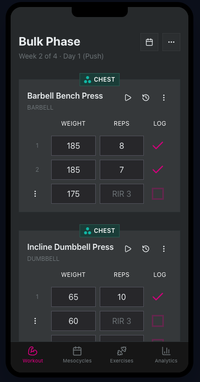
Mesostrength adapts your training in real time based on your performance and recovery signals.
Auto-Adjusted Volume
Weekly sets adapt based on your progress and recovery signals.
Structured Mesocycles
Complete training blocks with progressive overload and planned deloads.
Smart Progression
Automatic weight and rep prescriptions every session.
Fatigue Management
Built-in deload timing that prevents overtraining before it starts.
Performance Analytics
Track strength trends, volume history, and muscle group balance.
Personalized Programming
Every variable tailored to your experience, goals, and recovery.


Understanding Training Readiness
Training readiness is a snapshot of how prepared your body and mind are for a productive workout right now. Unlike long-term recovery tracking, readiness assessment captures your acute state on any given day, helping you decide how hard to push or whether to back off.
The Science Behind Readiness
Recovery is governed by multiple systems: muscular, neural, hormonal, and psychological. Sleep is the single most important factor because it affects all of these systems simultaneously. Growth hormone release peaks during deep sleep, cortisol is regulated by sleep quality, and neural recovery depends on adequate rest. This is why sleep receives the highest weighting in the readiness score.
How to Use Your Score
A high readiness score (80+) means you are primed for an intense session. This is the ideal time to push for progressive overload or attempt personal records. A moderate score (60 to 79) means you can train normally but should not expect peak performance. Low scores (40 to 59) call for reduced volume or lighter weights, while very low scores (under 40) suggest a rest day or very light active recovery is the smartest choice.
Building a Readiness Habit
Checking in with yourself before training does not need to be complicated. Take 60 seconds to honestly assess your sleep, soreness, stress, and motivation. Over time, you will develop an intuition for when to push and when to pull back. The goal is not to avoid hard training but to match your effort to your capacity on any given day. This approach reduces injury risk and leads to better long-term progress.
Frequently Asked Questions
Mesostrength plans your training for you.
Mesostrength is an app for people who want to build muscle. It tells you what to lift each week. It uses your logged workouts and recovery to adjust your sets and weights. This calculator does one piece of that. The app does all of it, automatically.